
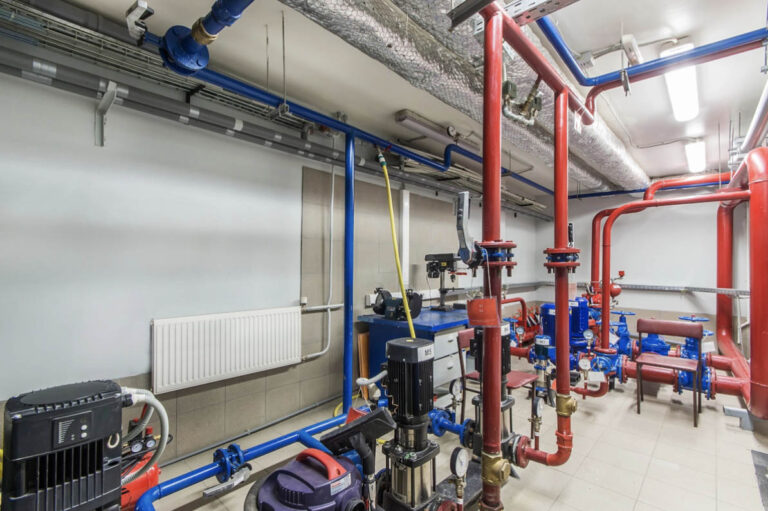
For Merton businesses keeping a close eye on overheads, June brought what looked like welcome news. The government confirmed it won’t press ahead with the energy efficiency deadline many commercial landlords and tenants had been bracing for. Plenty of owners will have read that as permission to leave the heating alone for another few winters.
In most cases that’s the wrong call. The regulatory clock has moved, but almost none of the costs of running a tired heating system were ever tied to that clock in the first place.
What changed in June, and what didn’t
In its interim response on minimum energy efficiency standards, published on 18 June 2026, the government set out a narrower approach than before. From 2031, privately rented non-domestic buildings over 1,000 square metres in England and Wales are expected to need an EPC rating of at least B, where cost effective. Smaller buildings stay at the current minimum of EPC E, the interim EPC C milestone once pencilled in for 2027 has been dropped, and none of it is law until secondary legislation passes.
That leaves most high street premises, small offices and light industrial units outside the tighter standard. If you lease your premises, though, the terms still shape who pays for what, which is worth revisiting alongside the move towards green lease provisions reshaping commercial agreements.
The reprieve doesn’t reach your energy bill
Regulation was never the real reason to replace failing heating plant. It was just the deadline that made people act.
Heating is one of the largest controllable overheads in most commercial buildings, and an ageing system quietly inflates it every day it runs. Efficiency drops as components wear, controls set up for an old layout keep warming space nobody uses, and a system sized for the business you were a decade ago rarely matches the business you are now. None of that arrives as one alarming invoice. It shows up as a slightly worse number each quarter, absorbed into general running costs, which is why it goes unchallenged for years.
Then there’s outright failure, and old plant has a habit of choosing the worst possible week for it. Emergency callouts cost more than planned work, and parts for older equipment can take days to source, if they’re still made at all. A business replacing on its own terms can specify properly and book the work for a quiet fortnight in spring. The same job, done reactively, is almost always the expensive version.
What a replacement actually involves
It’s rarely as simple as swapping one box for another. Fixed building services fall under Part L of the Building Regulations, so replacement work has to meet the efficiency standards that apply to it. The government’s Approved Document L guidance sets out what’s expected in buildings other than dwellings.
The harder question is what to put in. A warehouse with a tall roof void has almost nothing in common with a suite of small offices, and the system that suits one will disappoint in the other. Independent Heating & Cooling, who install and maintain commercial systems across the South East, highlight the main types of commercial heating system, from boilers and warm air units to radiant heating and heat pumps, along with the controls that decide how much of that heat reaches people rather than the ceiling. In a tall workshop, warm air gathers overhead while the floor stays cold, which is why destratification is standard practice in industrial buildings and completely beside the point in an office with a low ceiling.
Whatever the building, a credible quote follows a site survey because correct sizing depends on the fabric, the use and the occupancy, none of which can be judged over the phone.
Practical steps for Merton businesses
No snap decisions need to be made, and the warmer months are a good time to get the groundwork done calmly. A handful of checks will tell you whether your heating is a problem to plan for now, or simply something to keep an eye on.
- System Age: Establish how old your system is and whether spare parts are still supported. Anything near the end of its service life needs a plan.
- Consumption Costs: Compare your gas and electricity consumption across the last two winters. A steady climb with no change in occupancy usually points at the plant or the controls.
- Zoning and Controls: Heating the right areas at the right times is the cheapest improvement available, and often the one nobody has revisited.
- Energy Performance: Check your lease and your EPC, since obligations around alterations and energy performance affect what you install and who pays.
- Timing: Plan any replacement for spring or summer, when installers have more availability and prices are keener.
- Site Survey: Insist on one before you accept a quote. A number produced without one is a guess.
The Merton Chamber of Commerce supports local businesses in planning for changes like these. To join a community focused on practical business improvement, consider becoming a member or come along to one of our networking events.
Do you have a topic worth sharing with fellow members, but you’re not sure how to shape the message? I’d be happy for you to contact me (Chloe Miller), to discuss how I can help sharpen your content and connect with the local business community.
[Image source: Depositphotos]